Portfolio

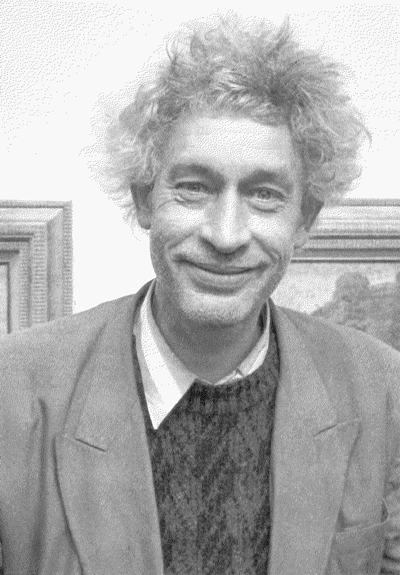
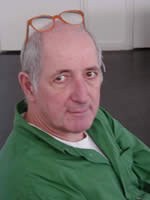
Karel Martens

2020-03-28T19:19:34+01:00

The Dr A.H. Heineken Prize for Art 1996 was awarded to graphic designer Karel Martens for his entire oeuvre.
The committee responsible for awarding the Dr A.H. Heineken Prize for Art recognizes Karel Martens as a versatile designer who has created a firm niche for himself in graphic design in the Netherlands. His products are characterized by traditional workmanship and simplicity. Glamour is not his style – he prefers to exploit plain, honest techniques and materials, a feature which is always evident in his choice of paper, letter type, colour and format. At the same time, Martens enjoys the confrontation between form and contents which always results in an exciting product, bearing the hallmark of quality and care. 
Among his clients have been the publishers Van Loghum Slaterus (Arnhem) in the 1960s, and the SUN (Nijmegen) in the years 1975-81, PTT Nederland, and various government institutions. 
In 1993 Karel Martens was awarded the H.N. Werkman Prize for the design of the architectural magazine Oase. In 1996 he received the Dr A.H. Heineken Prize for Art; as part of this prize, a monograph on his work was published: Karel Martens: Printed Matter
His work has been nominated three times at the Design Prize Rotterdam: 1995, for the design of the standard series of telephone chip-cards for PTT Telecom (this received an honorary commendation); 1997, for the book Karel Martens: Printed Matter; 1999, for the design of the façade of the Veenman printing works at Ede. In 1998 at the Leipzig Book Fair, Karel Martens: Printed Matter was awarded the gold medal, as the best-designed book ‘in the whole world’. Over the years his books have featured regularly in the annual Best-Designed Dutch Books competition.

Biography
Karel Martens (born 1939) finished as a student at the Arnhem School of Art in 1961. Since then he has worked as a freelance graphic designer, specializing in typography. Alongside this, he has always made free (non-commissioned) graphic and three-dimensional work. As well as designing books and other printed items, he has designed stamps and telephone cards. He has also designed signs and typographic façades for a number of buildings.
Karel Martens has taught graphic design since 1977. His first appointment was at the Arnhem School of Art (until 1994). He was then attached to the Jan van Eyck Academie in Maastricht (1994-99). From 1997 he has been a visiting lecturer in the graphic design department at the School of Art, Yale University. In the same year, together with Wigger Bierma, he started the Typography Workshop for postgraduate education within the ArtEZ, Arnhem.
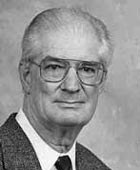
David de Wied

2020-12-29T11:13:20+01:00

David de Wied received the Dr A.H. Heineken Prize for Medicine 1996 for his innovative work in the field of neuropharmacology and behavioural pharmacology of neuropeptides.
Since the sixties, Professor De Wied’s research has focused on the so-called neuropeptides. These are small proteins produced in the brain or the hypophysis. As early as 1969, De Wied formulated the hypothesis that these peptides directly influence brain function and consequently human and animal behaviour. The assumption that these neuropeptides play such an important role in the brain has later been confirmed time and again by scientific research with more advanced techniques.
Through his concept of neuropeptides, De Wied originated current research into neuropeptides and neuropeptide receptors. There currently is, in fact, renewed interest in his ideas. The results of the studies in this area are used to develop medicines for behavioural disorders (like stress) and are expected to provide new applications in the near future.

Biography
Born on January 12, 1925 in Deventer, the Netherlands, David de Wied enrolled in the University of Groningen to study medicine. During his study he performed his Ph.D. thesis on the role of absorbic acid in adaptation to cold and in 1955 he obtained his MD. He was appointed professor of experimental endocrinology in Groningen in 1961 and from 1963 he has been director of the Rudolf Magnus Institute for Pharmacology for twenty-five years and Professor of Pharmacology at the University of Utrecht during the same period. David de Wied held many national and international leading posts in science among which chairman of the Dutch Organisation for Medical Research, the International Steering Committee of the European Training Programme in Brain and Behaviour Research, president of the Royal Netherlands Academy of Arts and Sciences.
De Wied has made an active contribution to the dissemination of his scientific insights. Under his inspiring directorship, the Rudolf Magnus Institute has become the centre at which scientists from all over the world come to work in this field.
David de Wied passed away in February 2004.

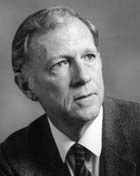
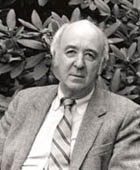
Heiko A. Oberman

2020-05-03T19:04:17+02:00

Professor Heiko A. Oberman has been awarded the Dr A.H. Heineken Prize for Historical Science 1996 for his studies on the relation between religious and intellectual ideas in the late middle Ages and early Reformation. The awarding committee is of the opinion that Oberman is a true pioneer in the field of Historical Science, particularly due to the new light he has shed on the study of the history of the Middle Ages and Modern Age. Oberman has moved beyond traditional boundaries by linking eras, subdisciplines and national research methods.
In the late sixties, Professor Oberman’s focus extended yet further and he called for a practice of history in which intellectual and social history could function, in harmony, side-by-side. This new approach was the impetus for his book Masters of the Reformation. The Emergence of a New Intellectual Climate in Europe (1977). From a methodological point of view, the great significance of this book was the step he initiated toward the analysis of religious views, such as those upheld among the various social strata. Oberman has bridged traditional gaps between historical subdisciplines and has broadened insight into the dissemination of religious innovation.

Biography
Professor Heiko A. Oberman was born in Utrecht, the Netherlands in 1930. He received his university training at the University of Utrecht. From 1964 until 1966 he was Winn Professor of Eccleciastical History, Harvard University. From 1966 until 1984 he was Director of the Institut für Spätmittelalter und Reformation, University of Tübingen, Germany. In 1984 he became Professor of the History of the Middle Ages, Renaissance and Reformation at the University of Arizona, Tucson, in the United States.
In 1981 and 1982, respectively, he published standard works on the origin of German anti-Semitism, The Roots of Anti-Semitism in the Age of Renaissance and Reformation and the biography Luther – Man between God and the Devil. Both works have been translated into Dutch.
Professor Oberman became a member (living abroad) of the Royal Netherlands Academy of Arts and Sciences in 1963. He passed away in 2001.

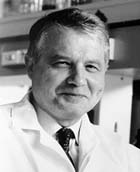
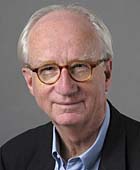
Herman E. Daly

2020-04-06T17:59:23+02:00

Herman E. Daly was awarded the Dr A.H. Heineken Prize for Environmental Sciences 1996 because of his original contribution to insights into the socio-economic aspects involved in the decline of the environment.
He was one of the first economists to focus on environmental problems, and may be regarded as the founder of the promising new discipline of ‘ecological economics’. Professor Daly studies the decline in the environment in relation to macro-economic activity. According to Daly, ultimately a sort of ‘steady state’ should be achieved in which the burden caused by economic production does not exceed the natural capacity of the environment. He has been instrumental in developing the idea that costs for the environment must be reflected in the market prices of goods and services. Daly’s first publications on this subject originate from as early as 1968. Over the last few years, Professor Daly has written in particular on the significance of economic welfare and the measuring thereof. His Index on Sustainable Economic Welfare (ISEW) has caused a sea change in thinking on welfare.
Professor Daly has provided a high-quality contribution to both the academic debate and political discussions on the environment. The committee hopes that awarding the Dr A.H. Heineken Prize for Environmental Sciences to Daly will be an extra stimulus to him to continue his work, and that it will also encourage those who are currently developing with him the discipline of ecological economics.

Biography
The economist Herman E. Daly was born in Houston, Texas, in 1938. Daly obtained his B.A. degree in Economics from the Rice University (Houston) in 1960. Seven years later he received the Ph.D. degree from the Vanderbilt University, Nashville, Tennessee. Daly has worked at various universities in the United States and Brazil. From 1988 to 1994 he worked for the World Bank, whose Environment Department he helped develop and expand further. His present position is Senior Research Scholar at the University of Maryland, School of Public Affairs, College Park.

Sir Michael J. Berridge

2020-12-28T15:04:54+01:00

Michael J. Berridge has been awarded the Dr H.P. Heineken Prize for Biochemistry and Biophysics 1994 for his contribution to the study of cellular signal mechanisms and the role of inositol trisphosphate in them.

Biography
Michael John Berridge was born in Gatooma, Rhodesia, in 1938 and obtained the B.Sc. degree from the University College of Rhodesia and Nyasaland in Salisbury. In 1965 he received the Ph.D. degree from the University of Cambridge, and then spent four years as a postdoctoral fellow at the University of Virginia and at Case Western Reserve University in the USA. In 1969 he returned to Cambridge where he was appointed to a scientific position in the Invertebrate Chemistry and Physiology Unit of the Department of Zoology, now Laboratory of Molecular Signalling. In 1994 Berridge was made honorary professor. He is working as an Emeritus Babraham Fellow at the Babraham Institute.
Professor Berridge is a fellow of the Royal Society and has won many prizes and awards for his scientific work. These include the Gairdner Foundation International Award, the Albert Lasker Basic Medical Research Award and the CIBA-GEIGY/DREW Award in Biomedical Research. He has given numerous award lectures, such as the 16th FEBS Ferdinand Springer Lecture and the Inaugural Albert L. Lehninger Lecture. He sits on the editorial boards of many prestigious scientific journals.
Professor Berridge passed away in February 2020.

Matthijs Röling

2020-04-12T08:46:08+02:00

Painter and teacher Matthijs Röling received the Dr A.H. Heineken Prize for Art 1994 for his entire painted oeuvre.

About the laureate
Matthijs Röling was born in the village of Oostkapelle in the Dutch province of Zealand in 1943. In 1960 he began his training at the Koninklijke Academie in The Hague. In 1963 he transferred to the Rijksacademie in Amsterdam, from which he was expelled a year later. Since 1973 Matthijs Röling has taught at the Academie Minerva in Groningen.
In 1962 Röling began exhibiting his work regularly in museums and galleries throughout the Netherlands. Galleries which have shown his work include M.L. de Boer and Galerie Mokum in Amsterdam as well as Galerie Wiek XX in Groningen.
In 1983 Matthijs Röling began working on large-scale decorative projects, such as monumental canvases and wall and ceiling paintings. His colleague Wout Muller has collaborated with him on a number of these. These projects have come to occupy an increasingly important place within Röling’s highly diverse oeuvre. His manner has been compared to that of the Old Masters, and the illusionistic scenes he paints on walls and ceilings are reminiscent of frescoes. Notwithstanding these parallels with the past, Röling’s work is distinguished by his independence, integrity and craftsmanship.

Luc Montagnier

2022-03-02T10:51:41+01:00

Luc Montagnier has been awarded the Dr A.H. Heineken Prize for Medicine 1994 for his greatest contribution to medical virology to date: the discovery in 1983 of the virus that causes AIDS.
His exceptional willingness to share his data with other research learns contributed significantly to our knowledge of the AIDS virus (Human Immunodeficiency Virus, or HIV). This in turn facilitated the rapid development of a diagnostic test to determine infection with the AIDS virus. This test was crucial for charting the spread of the epidemic and for the development of preventive strategies.
Montagnier’s team also isolated a closely related virus, HIV-2, which is primarily responsible for the West African epidemic. This discovery played a key role in investigations of the origins and evolution of immunodeficiency viruses.
Professor Montagnier has been of great service to humanity by making the results of his pivotal research immediately available to the scientific community. His openness has spared many people the fate of infection with the HIV virus through blood or blood products or as a result of unprotected sex. His sense of social responsibility has made him a leading figure in the struggle against AIDS in France and elsewhere.

Biography
Virologist Luc Montagnier was born in Chabris, France, in 1933. Montagnier received his MD from the University of Paris in 1960. In 1973 he became head of the Viral Oncology Unit at the Pasteur Institute and was appointed Professor of Virology in 1985. Since 1974 he has been Director of Research at the National Center for Scientific Research (CNRS) of France.
In 1963 Montagnier unravelled the replication mechanism of an RNA virus, the encephalomyocarditis virus. Shortly thereafter he published a test that made it possible quantitatively to determine polyoma virus induced transformation in mammalian cell cultures. Both of these achievements have had a significant impact on subsequent developments in fundamental virology.
Professor Montagnier has previously received the following prizes: Rosen (1971), Gallien (1985), Lasker (1986), Gairdner (1987), Santé (1987), Japan (1988) and King Faisal (1993). He is Chevalier de la Légion d’Honneur (1984), Commandeur de l’Ordre National du Mérite (1986), Officier de la Légion d’Honneur (1990) and Commandeur de la Légion d’Honneur (1993). In 2008 he won the Nobel Prize in Physiology or Medicine together with Françoise Barré-Sinoussi and Harald zur Hausen.
Professor Montagnier passed away in February 2022.

Peter R.L. Brown

2020-05-03T19:10:11+02:00

Peter R.L. Brown was awarded the Amsterdam Prize for Historical Science 1994 for his research on the transition from paganism to Christianity in late Antiquity.
Peter R. L. Brown received the prize in recognition of the fact that his work is not afraid to challenge conventional historical wisdom. In a series of brilliant, highly readable studies, Peter Brown has subtly described the gradual transition from paganism to Christianity in late Antiquity. Brown has shown an uncanny knack for bringing to light aspects of this process which have been largely ignored. As an historian Brown oversteps the traditional chronological boundaries between the late Roman Empire and the early Middle Ages in his search for what distinguished and what united pagans and Christians, and for the answers to the questions as to how and why the pagan world of ancient Rome was gradually transformed into the Christian. Professor Brown has a long list of publications to his credit, many of which have been translated into other languages. His masterful biography of the great Latin doctor of the Church St Augustine, which appeared in 1967, was followed three years later by his brilliant World of Late Antiquity. From Marcus Aurelius to Mohammed. Brown’s Power and Persuasion in Late Antiquity. Towards a Christian Empire (1992) is a compelling account of how the Church adopted the pagan ideal of co-operation between the urban elite and the central imperial government under the guise of Christianity.
Professor Brown’s research engages and informs the educated layman as effectively as it does the professional scholar. His studies of a subject of no less weight than the Christian conversion of Europe are as intellectually profound as they are pleasurable to read.

Biography
Peter R.L. Brown was born in Dublin in 1935. He received his university training at New College, Oxford (MA) and remained at Oxford until 1975, as Fellow of All Souls (1956-1975), as Lecturer in Late Roman and Early Byzantine History (1970-1973) and as Reader with the same teaching responsibilities (1973-1975). From 1975 until 1976 he was Professor of History and Classics at Royal Holloway College, University of London. In 1978 he left England to become Professor of History and Classics at Berkeley (1975-1986). In 1986 he moved to Princeton University and in 1991 Brown was appointed foreign member of the Royal Netherlands Academy of Arts and Sciences.

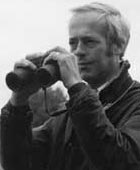
BirdLife International (Colin J. Bibby)

2020-03-30T18:32:11+02:00

Colin Bibby was awarded the Dr A.H. Heineken Prize for Environmental Sciences 1994 for BirdLife International, in recognition of the pioneering international research being conducted by BirdLife International and also to help ensure its continuation.

BirdLife International
BirdLife International is a worldwide co-operative of organisations in the field of bird protection. They seek to protect birds and their natural habitats as one means of safeguarding the environment. Their endeavours are in the interest of all human and animal life on earth.
Birds are outstanding indicators of the condition of the environment, since they can be observed more easily and studied more closely than almost any other group of organisms. The scientific team of BirdLife International takes advantage of this fact by implementing and constantly evaluating its programme for the protection of biodiversity. The scientists at BirdLife are pioneers in documenting the worldwide threat to biodiversity.
The publication Putting Biodiversity on the Map (1992) convinced the jury to award the prize to BirdLife International. The study is an attempt to document patterns in the spread of biodiversity over the earth. It showed that one fourth of all bird species occur in a very small part of the world.

About the laureate
Until 2001 Dr Bibby (1948) headed a small group of researchers at BirdLife International in Cambridge, England. At the same time he directed BirdLife International’s research programmes in some seventy countries. He left BirdLife in 2001 and devoted his professional time to helping other conservation organisations and international companies to develop their strategic thinking for biodiversity conservation. He passed away on 7 August 2004.

Piet Borst

2020-12-28T14:36:30+01:00

Piet Borst received the Dr H.P. Heineken Prize for Biochemistry and Biophysics 1992 in recognition of his extraordinary record of scientific achievement in the fields of biochemistry and molecular biology.
What distinguishes Borst is his catholicity: he has made significant contributions to scientific research in several different fields. In the early stages of his career, Borst became interested in the metabolism of mitochondria. The malate-aspartate cycle, or ‘Borst cycle’, owes its name to the laureate, who discovered it is the principal route for the oxidation of extra-mitochondrial NADH in animal tissue. His studies on the biogenesis of mitochondria led to the discovery and characterisation of circular mitochondrial DNA in animal cells and yeast, and to important insights into the way this DNA is replicated. He was instrumental in mapping the genes in and the transcription of yeast mitochondrial DNA, besides its physical and genetic characteristics. One of the most widely used methods in molecular biology agarose gel electrophoresis of DNA – grew out of this research. More recently Professor Borst has devoted himself to the study of trypanosomes. These unicellular parasites cause sleeping sickness, which is often fatal. His work on the antigenic variation of trypanosomes led to several important findings, including discontinuous RNA synthesis and trans-splicing (the first example of pre-RNA splicing in protozoa), and the growth and contraction of trypanosome telomeres. He also discovered unique specialised organelles, the glycosomes. At the Netherlands Cancer Institute Borst began working on genes involved in the multidrug resistance of cancer cells and on the structure of amplified DNA. The laureate is not only an outstanding scientist, but also an excellent administrator, a gifted speaker, and both an inspired and inspiring teacher.

Biography
Piet Borst was born in Amsterdam in 1934. He studied medicine at the University of Amsterdam, where he received a PhD in biochemistry in 1961 and the MD degree in 1963, before spending two years as a research fellow at New York University. In 1965 he was made associate and in 1969 full professor of physiological chemistry at the University of Amsterdam, where he subsequently held the chair of biochemistry and molecular biology since 1974. In 1983 he was appointed research director of the Netherlands Cancer Institute in Amsterdam, while retaining a part-time university professorship of clinical biochemistry. Professor Borst is a member of the Royal Netherlands Academy of Arts and Sciences and of the Academia Europaea, a foreign member of the Royal Society, London, a foreign associate of the National Academy of Sciences, USA, and a foreign honorary member of the American Academy of Arts and Sciences, USA. He has received various honours and prizes for his scientific work. He is a member of the European Molecular Biology Organisation, or EMBO; he sat on the EMBO’s council from 1978 to 1984 and chaired its Scientific Advisory Committee from 1987 to 1991. He served and serves on the Scientific Advisory Committees of several European research institutes and he has chaired the juries of the Jeantet Prize (Europe) and of the Sloan General Motors Prize (USA). Since 1983, professor Borst writes a column for the scientific supplement of the Dutch paper NRC-Handelsblad.

Go to Top