

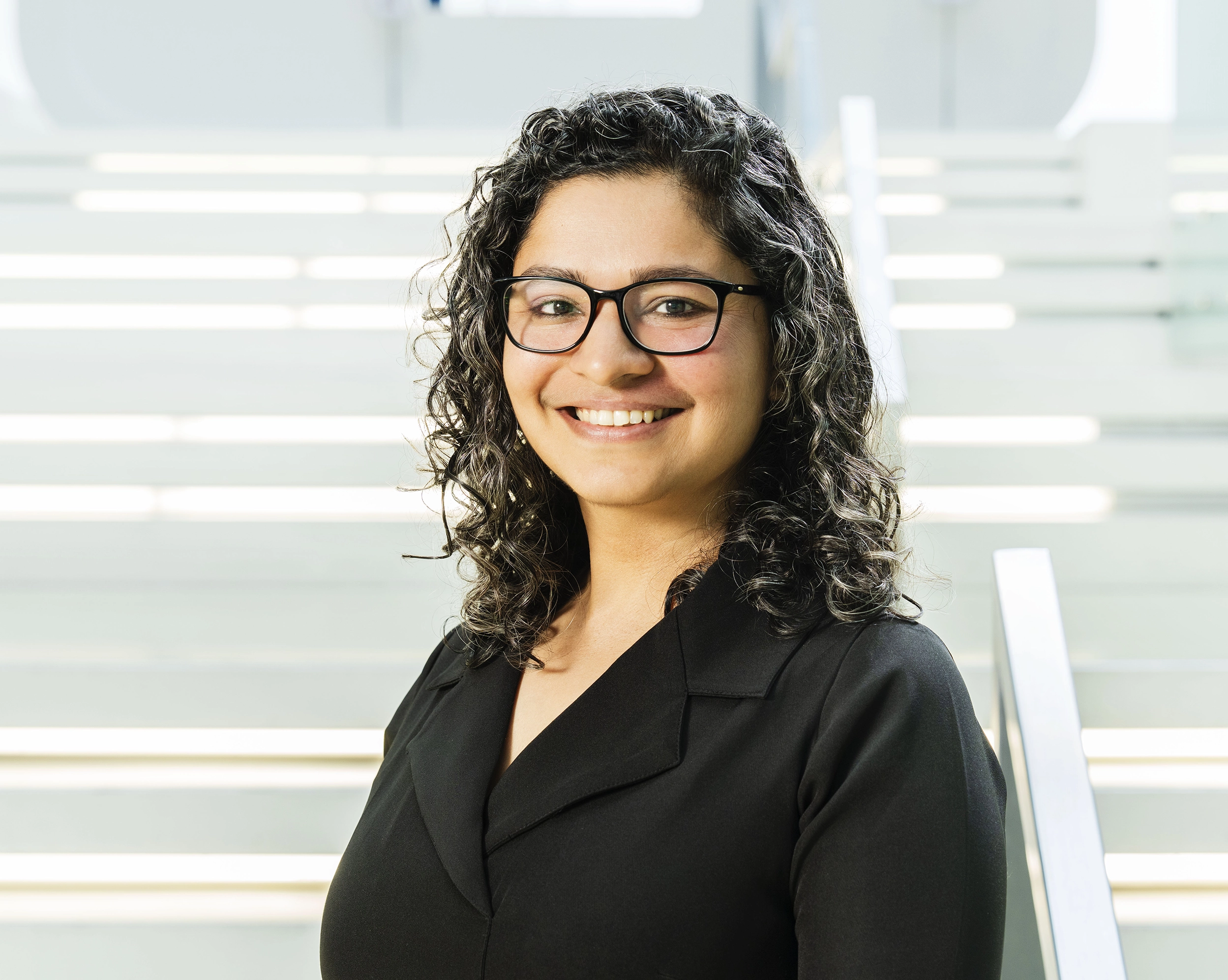
Software is intricately intertwined with virtually every aspect of our lives, from paying by card at the supermarket to checking in to board a train. When software fails, it can disrupt the daily lives of millions of people. Ayushi Rastogi (1989), assistant professor of software engineering at the University of Groningen, investigates how software can be developed to be reliable and future-proof – especially in light of the ever-increasing role claimed by AI. For her research, which affects both academia and industry, she is receiving the Heineken Young Scientists Award for Natural Sciences 2026.
In a highly digitised country like the Netherlands, even minor software errors can have major consequences, ranging from public transport system failures to disruptions in healthcare. Rastogi’s research focuses on the human side of software development: how do behaviour, collaboration, and social factors influence the way software is built and evolves over time? She examines practices such as code reviews, team coordination, and the use of AI in software development. For that purpose, she combines large-scale data analysis with surveys and in-depth interviews.
What sets her approach apart is that she works with real-life software systems rather than in a lab. This offers a unique behind-the-scenes perspective on how software companies operate. “I study large-scale software systems in which thousands of developers (and increasingly AI) are constantly adapting and redeveloping software.” She translates the insights she gains into concrete guidelines for developers and organisations worldwide.
Diversity in development teams
Diversity within development teams also plays a key role in Rastogi’s research. A lack of representation can lead to software working less well for certain user groups. A well-known example is facial recognition, which is less accurate for darker skin tones. In her opinion, it is therefore important not only to train with diverse data but also to ensure that the teams themselves are diverse.
Jury praises bridge between science and practice
According to the jury, chaired by Hester den Ruijter (professor at UMC Utrecht), Rastogi is highly effective at connecting fundamental scientific research with practical applications. Her work receives international recognition and is high-profile in academia and industry. In addition, the jury appreciates her commitment to a more inclusive sector. “In doing so, she contributes to a digital world that not only functions well, but is also accessible to a wider group of people,” says Den Ruijter.
Future research
As AI takes over more and more software development tasks, the role of the developer is also shifting. Rastogi: “The challenge is to ensure that AI accelerates coding and routine tasks, while developers retain the overview and final responsibility.” In the next few years, Rastogi wants to further investigate how humans and AI can effectively collaborate in building the next generation of software systems.