

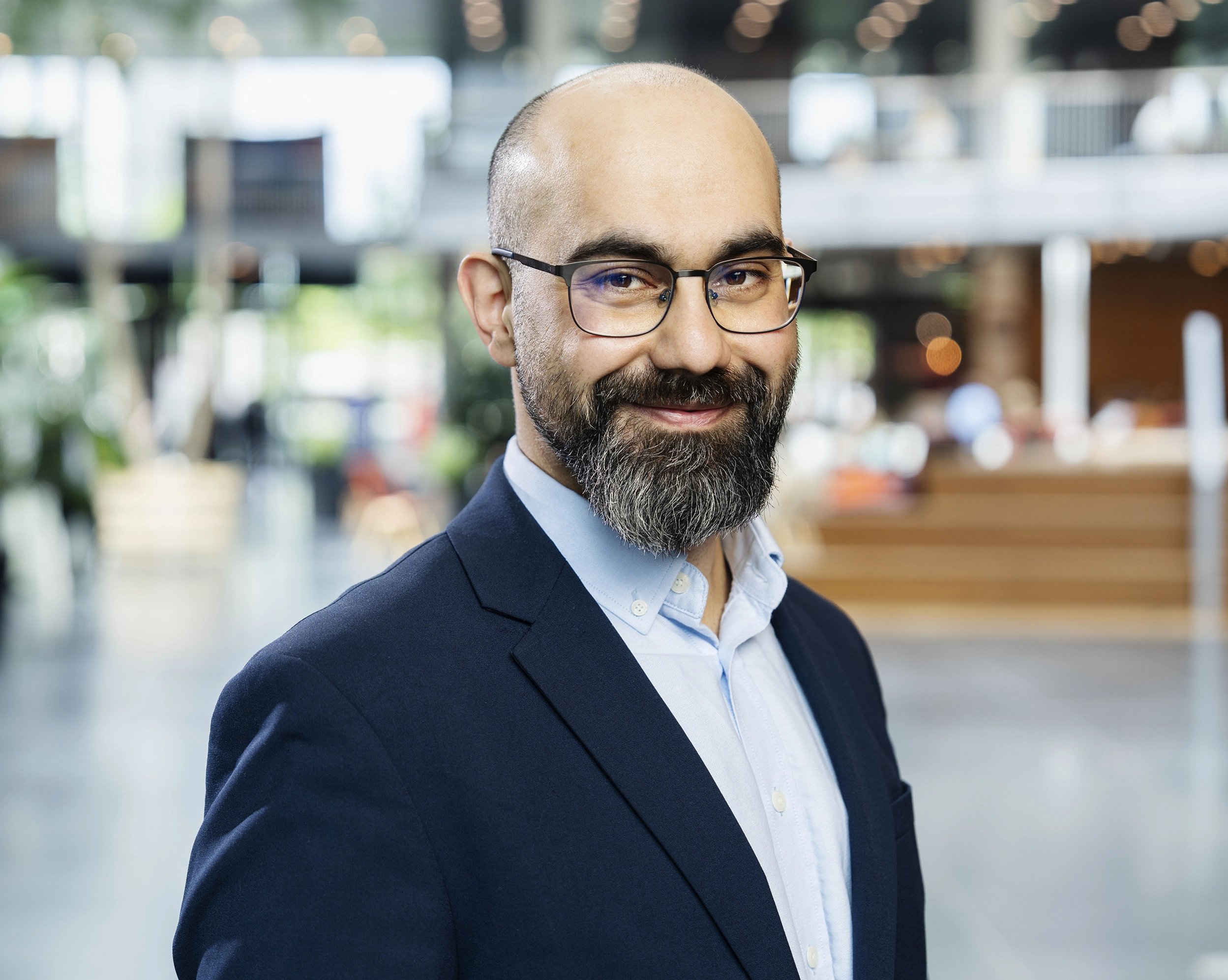
Over the centuries, religions have adopted all sorts of ideas and customs from each other. Yusuf Çelik (1986), assistant professor of Digital Humanities and Islam at VU University Amsterdam, investigates exactly how these cross-pollinations came about. Using AI, he peruses and analyses millions of pages of historical texts –work that would otherwise take researchers many years to complete. For his research, he is receiving the Heineken Young Scientists Award for Humanities 2026.
Where digital search methods used to rely on exact keywords, such as ‘Jewish’ or ‘Muslim’, AI also recognises contextual connections without these specific terms appearing in the text. For example, when searching for ‘dogs’, AI also identifies passages about ‘faithful four-legged friends’. Thanks to these technological advances, Çelik has discovered connections between religions that had previously remained hidden from view for preceding generations of scholars.
Religious cross-pollination
To research exactly how religious cross-pollination took place, Çelik has analysed massive numbers of historical texts using AI. His research shows, for example, that Jews played a significant role in the early development of Islam. This contact between Muslims and Jewish communities dates back to the earliest period of Islam in Medina. Later, in the 8th and 9th centuries, as Islam propagated to areas where Jewish communities also lived, this dialogue continued in other regions. Jews who converted to Islam played a key role here: they brought knowledge and experiences that other Muslims did not have – knowledge that Muslim scholars subsequently incorporated into their own writings.
Jury praises innovative methodology
The jury, chaired by Hester den Ruijter (professor at UMC Utrecht), praises Çelik as a role model in his field. “His research demonstrates the possibilities that new digital methods offer for science,” says Den Ruijter. What the jury particularly values is the originality with which Çelik has revealed patterns in large collections of historical texts, and the way in which he has continued to put digital humanities on the map as an interdisciplinary field.
Plans for the future
Çelik intends to continue expanding his research in the years to come. For instance, he wants to analyse historical sources in which people describe their dreams. Did they dream about tangible everyday things, such as camels and commerce? Or about more abstract desires, such as lost loves or adventure? And within that context, do different patterns emerge across the regions of the Islamic world? He also wants to explore how people experienced and described heartbreak in the past.
At the same time, Çelik advocates greater recognition of cultural cross-pollination. “I am Muslim myself and I have reservations about working on Sundays,” he says. “But that doesn’t come from Islam. Because I grew up in the Netherlands, I have subconsciously adopted that Christian attitude. That shows that we are all connected.”