Portfolio

John R. McNeill

2022-08-18T14:14:31+02:00

The Royal Netherlands Academy of Arts and Sciences has awarded the Dr A.H. Heineken Prize for History 2018 to John R. McNeill, Professor of History at Georgetown University in Washington D.C. (USA).

Storyteller and investigator of unparalleled vision
John R. McNeill received the Dr A.H. Heineken Prize for History for his important work in integrating two recent branches of the study of history: global history and environmental history.
John McNeill is best known for his book Something New Under the Sun: An Environmental History of the Twentieth-Century World (2000), in which he tells the story of human activity during the previous century and its impact on the Earth. He describes how economic, demographic, social and technological changes influenced every aspect of the Earth’s environment; conversely, he shows how the natural environment has often had a dramatic impact on the course of human history. In McNeill’s view, however, the changes that took place in the 20th century were on an unprecedented scale.
As he often does, McNeill drew inspiration from many different disciplines, including the natural sciences, earth science, the technical sciences, archaeology and agricultural science. In doing so, he helped to integrate two recent branches of the study of history: global history and environmental history.
His work is exceptional for the apparent ease with which he weaves centuries, continents, cultures, scientific disciplines and languages into a single narrative, and for his unparalleled ability to draw from sources in all these fields.
Thanks to his unique perspective, fellow historians have new questions to investigate. His lucid, precise, sparkling writing style, humorous and erudite, has enchanted scores of readers.

Researcher
John R. McNeill was born in Chicago (IL, USA) in 1954. After receiving his Bachelor’s from Swarthmore College in Swarthmore (PA, USA) and spending a year teaching Geography and Economics in Athens (Greece), he completed his Master’s in History at Duke University in Durham (NC, USA). He earned his PhD at the same university in 1981 for his study of the relationship between the French and Spanish empires and their Atlantic colonies in the 18th century.
McNeill became a member of the History faculty at Georgetown University in Washington DC (USA) in 1985. Since 1985, he has also taught at the Edmund A. Walsh School of Foreign Service, a centre for research and teaching on global affairs.
He became a professor at Georgetown University in 1993. Furthermore he had visiting appointments in New Zealand, Paris and Oslo. As an historian, he serves on various environmental boards and committees.
NcNeill is a member of the American Academy of Arts and Sciences. He has received numerous honours and awards, including two Fulbrights, a Guggenheim Fellowship, a MacArthur Foundation Fellowship, the Toynbee Prize and the World History Association’s Pioneer of World History Award.

Video

Video interview with John McNeill, laureate of the Dr A.H. Heineken Prize for History 2018

Introduction to the work of John McNeill, laureate of the Dr A.H. Heineken Prize for History 2018
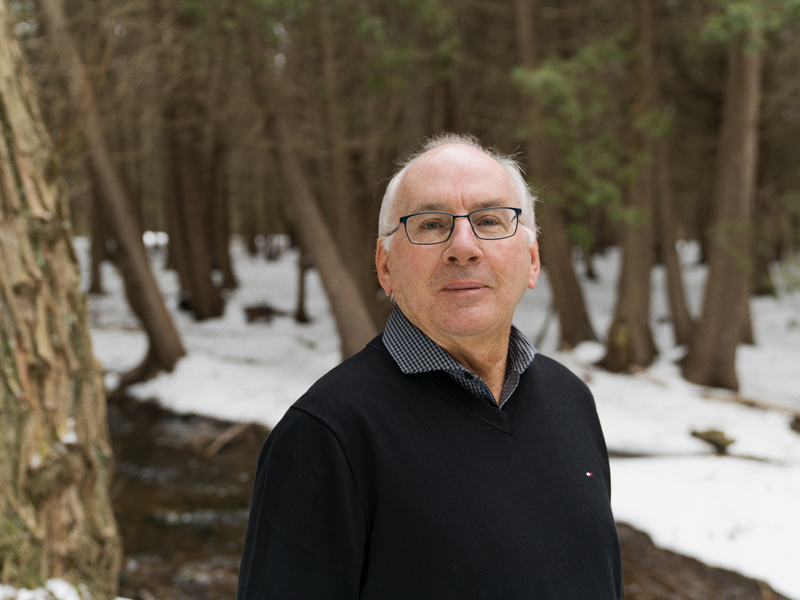
Paul D.N. Hebert

2022-08-01T18:25:47+02:00

The Royal Netherlands Academy of Arts and Sciences has awarded the Dr A.H. Heineken Prize for Environmental Sciences 2018 to Paul Hebert, Research Chair in Molecular Biodiversity at the University of Guelph (Canada).

A catalogue for the library of life
Paul Hebert received the Dr A.H. Heineken Prize for Environmental Sciences for his pivotal contribution to developing a genetic barcode capable of classifying every biological species on Earth.
Paul Hebert is known as the ‘father of DNA barcoding’, a taxonomic method that uses a short section of DNA from a standardised region of the genome to identify different species, in the same way a supermarket scanner uses barcodes to identify purchases.
Hebert first raised the possibility of such a method in 2000. He is now the Scientific Director of the International Barcode of Life Project (iBOL), in which researchers from 25 countries are attempting to assign barcodes to millions of species on Earth.
The project has demonstrated that DNA barcoding can speed the discovery of new species and distinguish between separate species that used to be classified as one. Thanks to DNA barcoding, we now have a more precise way of measuring the number of species that inhabit a specific ecosystem and we can analyse complex food chains with much greater accuracy.
The Barcode of Life Project is generating an impressive stream of data. Hebert’s research group is building digital systems to gather, store and analyse all this information and make it available to the community. The database now contains the genetic codes of approximately 600,000 species and is being used by almost 25,000 researchers worldwide.
New methods are bringing the ultimate goal of the project ever closer: a comprehensive inventory of global biodiversity. If the project succeeds, its legacy will yield lasting benefits to humankind.

Researcher
Paul Hebert was born in Kingston, Ontario (Canada) in 1947. He studied Biology at Queen’s University but transferred to the University of Cambridge (United Kingdom) for his doctorate in Genetics.
After obtaining his PhD in 1972, Hebert spent three years at Sydney University (Australia) and a year at the Natural History Museum in London as a postdoctoral fellow. Back in Canada, he took up his first research post at the University of Windsor in 1976.
In 1986 he became the Director of the Great Lakes Institute at Windsor; four years later, he was appointed to a chair at the University of Guelph (Canada).
In addition to his professorship, Hebert has also chaired the Huntsman Marine Science Centre; he is currently Scientific Director of the International Barcode of Life Project and Director of the Centre for Biodiversity Genomics.
In 2015, he was invested as an Officer of the Order of Canada. He has received various other honours and prizes, including the Aster Award from the Toronto Botanical Garden. He was awarded an honorary doctorate from the University of Waterloo (Canada) and was made an honorary professor of the Chinese Academy of Sciences’ Institute of Zoology.

Video

Video interview with Paul Hebert, laureate of the Dr A.H. Heineken Prize for Environmental Sciences 2018

Introduction to the work of Paul Hebert, laureate of the Dr A.H. Heineken Prize for Environmental Sciences 2018

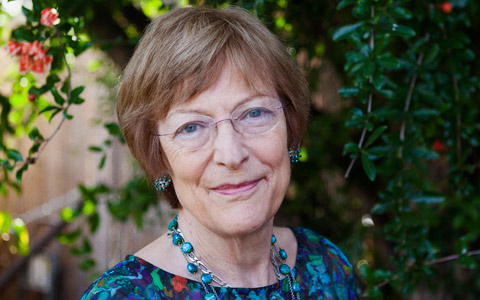
Nancy Kanwisher

2022-08-18T16:17:09+02:00

The Royal Netherlands Academy of Arts and Sciences has awarded the C.L. de Carvalho-Heineken Prize for Cognitive Science 2018 to Nancy Kanwisher, Professor of Cognitive Neuroscience in the Department of Brain and Cognitive Sciences at the Massachusetts Institute of Technology in Cambridge (USA).

A region of the brain specialising in facial recognition
Nancy Kanwisher received the C.L. de Carvalho-Heineken Prize for Cognitive Science for her highly original, meticulous and cogent research on the functional organisation of the human brain.
Nancy Kanwisher is an exceptionally innovative and influential researcher in cognitive neuropsychology and the neurosciences.
Early in her career, she conducted behavioural research to study visual perception. One of her discoveries was that the short-term memory drops the second occurrence of a word in a sentence or a picture in a series of images.
Kanwisher was also one of the first to use functional magnetic resonance imaging (fMRI) to understand the functional organisation of the brain. Fellow researchers – even those who remain relatively sceptical about what fMRI scans really tell us – regard her work in this area as original, intelligent, meticulous, reproducible and cogent.
Her research is teaching us a great deal about the effects of such cognitive processes as attention and awareness. She has also localised areas of the brain that have highly specialised functions, for example perceiving places or images of the human body.
Her work has generated groundbreaking new insights into specialised brain regions and how they divide up tasks. Her discovery of the fusiform face area, a region that specialises in perceiving faces, was later confirmed in electrophysiological studies in non-human primates.
Much of Kanwisher’s work has found its way into cognitive neuroscience textbooks and it continues to influence the way researchers think about the functional organisation of the human brain. For example, it plays a role in a lively, longstanding scientific debate: is our brain mainly a holistic network, or does it consist of separate modules that perform highly local, specialised tasks?

Researcher
Nancy Kanwisher was born in Woods Hole (MA, USA) in 1958. After studying Biology at the Massachusetts Institute of Technology (MIT) in Cambridge (MA, USA), she was awarded a PhD in Cognitive Psychology by the same university in 1986.
In 1987, Kanwisher moved across Cambridge to join the faculty of Psychology at Harvard University. In 1988 she moved again, this time to the West Coast to take up positions at the University of California in Berkeley and Los Angeles. She returned to Cambridge in 1994. Since 2000, she has held positions at Massachusetts General Hospital, the McGovern Institute for Brain Research and MIT.
Kanwisher is a member of the US National Academy of Sciences and the American Academy of Arts and Sciences. She has received various honours and awards, including the US National Academy of Sciences’ Troland Research Award (1999), the Minerva Foundation’s Golden Brain Award (2007) and the National Institutes of Health Director’s Pioneer Award.

Video

Video interview with Nancy Kanwisher, laureate of the C.L. de Carvalho-Heineken Prize for Cognitive Science 2018

Introduction to the work of Nancy Kanwisher, laureate of the C.L. de Carvalho-Heineken Prize for Cognitive Science 2018

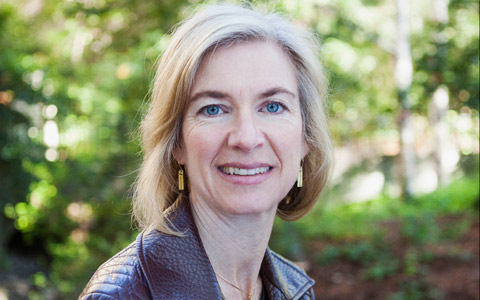
Jennifer Doudna

2022-08-18T16:49:41+02:00

The Royal Netherlands Academy of Arts and Sciences has awarded the Dr H.P. Heineken Prize for Biochemistry and Biophysics 2016 to Jennifer Doudna, Professor of Biomedical Sciences at the University of California in Berkeley (United States).

Pioneering research laying the foundations for revolutions in modern biochemistry 
Jennifer Doudna received the Dr H.P. Heineken Prize for Biochemistry and Biophysics for her pioneering research into the structure and functioning of RNA molecules and RNA protein complexes.
From the beginning of her career, Jennifer Doudna knew that knowledge of the structure of RNA molecules was essential in order to understand their catalytic effect. She therefore started analysing crystal structures of RNA molecules right at the outset of her studies.
At first, these were relatively simple molecules. However, in the mid-1990s, she made a daring but successful attempt to crystallise and analyse a much larger RNA molecule: the Tetrahymena ribozyme P4-P6 domain. For the first time, researchers learnt how a long, complex RNA strand folds itself into functional bends so as to interact with surrounding molecules.
Doudna is still a leading researcher in the rapidly expanding research field dealing with the functioning of RNA molecules and RNA protein complexes. Her work created the foundations for exciting developments at the forefront of biochemistry: RNA interference and CRISPR, a bacterial system of defence against invading DNA that can now be used to edit the DNA code of living organisms with the greatest possible precision.

Researcher
Jennifer Doudna was born in 1964 in Hawaii (US). She studied at Pomona College in Claremont, California, but after gaining a bachelor degree in chemistry, she relocated to Harvard University in Cambridge (Massachusetts). Under the supervision of Jack Szostak (who was later to win both the Dr H.P. Heineken Prize for Biochemistry and Biophysics (2008) and a Nobel Prize in Physiology or Medicine (2009)), she was awarded a doctorate in 1989 for research into ribosomes, DNA-creating structures at the centre of a cell.
In that same year, Doudna continued her research at the University of Colorado (in Boulder) together with Thomas Cech, who later also won both the Dr H.P. Heineken Prize for Biochemistry and Biophysics (1988) and a Nobel Prize in Chemistry (1989). In 1994, she was appointed assistant professor at Yale University. Three years later, she became an investigator at the prestigious Howard Hughes Medical Institute.
In 2002, Doudna was appointed Professor of Biochemistry and Molecular Biology at the University of California in Berkeley, where she still occupies a chair.
Jennifer Doudna is a member of the American National Academy of Sciences. She has been awarded many prizes, including the Paul Janssen Award for Biomedical Research in 2014, the Breakthrough Prize in Life Sciences in 2015 and in 2016 the L’Oréal-UNESCO For Women in Science Award and the Canada Gairdner International Award.
In 2020, Jennifer Doudna has been awarded the Nobel Prize in Chemistry, together with Emmanuelle Charpentier.

Video

Jennifer Doudna, laureate of the Dr H.P. Heineken Prize for Biochemistry and Biophysics 2016 

Introduction to the work of Jennifer Doudna, laureate of the Dr H.P. Heineken Prize for Biochemistry and Biophysics 2016 

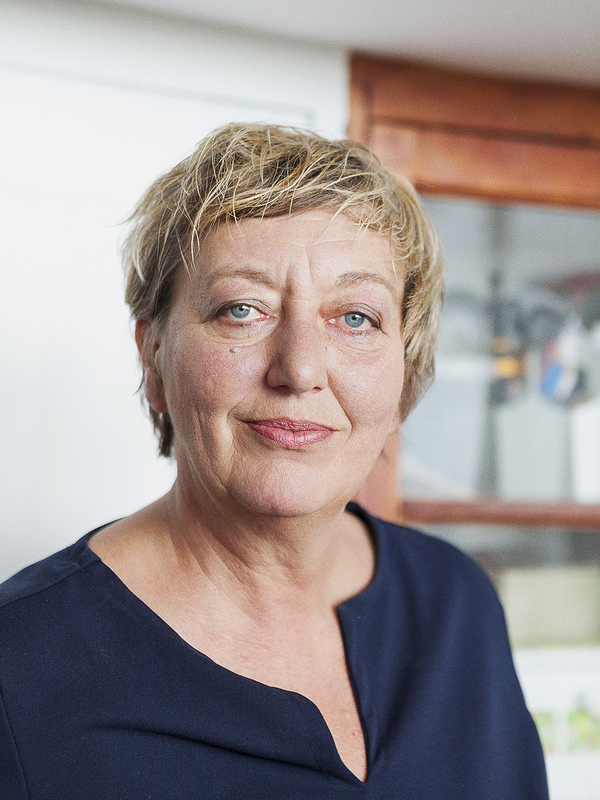
Yvonne Dröge Wendel

2022-08-18T17:11:53+02:00

Dutch visual artist Yvonne Dröge Wendel has been awarded the Dr A.H. Heineken Prize for Art 2016. The international jury has praised Wendel’s work for its originality, inventiveness and vitality.

Art
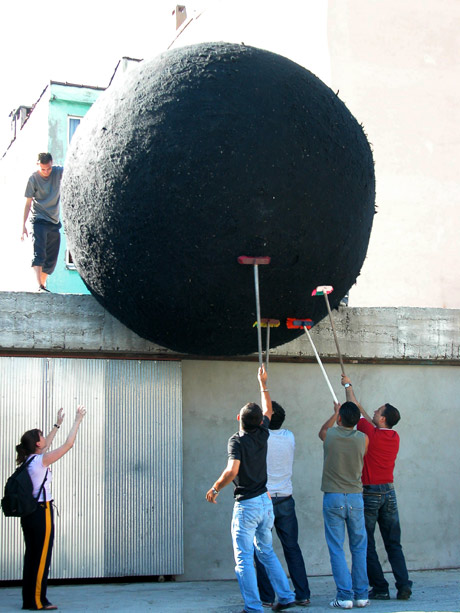
The drive behind her work is tangible and visible in her playful, philosophical studies of how objects influence human behaviour. One notable example is the artwork Black Ball, a large felted ball measuring 3.5 metres in diameter, that the public moves down streets and alleyways and through gates and doorways. People respond with visible enjoyment to the ball and interact spontaneously with it. In her PhD research project, she is examining the relational and performative abilities of things, a theme that touches on present-day questions about our relationship to the world around us. By awarding the Dr A.H. Heineken Prize for Art to Yvonne Dröge Wendel, the jury is emphasising the potential of art to change our perception and experience of the world.

Artist
Yvonne Dröge Wendel (born in Karlsruhe, Germany, in 1961) lives and works in Amsterdam. She trained at the Gerrit Rietveld Academie  in Amsterdam and was an artist in residence at the Rijksakademie in Amsterdam (1993-1994) and Delfina Studios in London (2002-2003). She is currently working on a PhD artistic research project at the University of Twente. She is also head of the department of fine arts at the Gerrit Rietveld Academie. She publishes art books, features frequently in solo and group exhibitions, and engages on a regular basis with the public in public spaces. In 1994 she won the second Prix de Rome to be awarded in the fine arts and theatre.

Works of art

Black Ball Istanbul Photo: Yvonne Dröge Wendel

Video

Yvonne Dröge Wendel, visual artist, laureate of the Dr A.H. Heineken Prize for Art 2016

Introduction to the work of Yvonne Dröge Wendel, laureate of the Dr A.H. Heineken Prize for Art 2016

Stephen Jackson

2022-08-18T17:32:23+02:00

The Royal Netherlands Academy of Arts and Sciences has awarded the Dr A.H. Heineken Prize for Medicine 2016 to Steve Jackson, Professor of Biology at the University of Cambridge (United Kingdom).

DNA repair: the Achilles’ heel of cancer cells
Steve Jackson received the Dr A.H. Heineken Prize for Medicine for his fundamental research into DNA repair in human cells and for the successful application of knowledge of that process in the development of new cancer drugs.
DNA molecules in our cells are continuously being damaged. Healthy cells can signal such damage and trigger various repair mechanisms, such as a mechanism that reconnects broken DNA strands.
Jackson investigated how cells know what type of repair is needed and what signal is given to start the correct repair process. Moreover, he successfully applied that knowledge in medical research.
In cancer cells, one or more DNA repair methods are often defective. Consequently, they cannot be properly controlled. Jackson explores mechanisms of DNA repair and looks for new drugs that kill cancer cells by breaking down their recovery capacity even further. He exploits a concept called ‘synthetic lethality’. It is now clear that this concept has potential. In 2014, a new drug became available to treat a certain type of ovarian cancer. Clinical application trials for other cancer types are in progress.

Researcher
Steve Jackson was born in 1962 in Nottingham (United Kingdom). In 1983, he gained a bachelor degree in biochemistry at the University of Leeds. In 1987, he was awarded a PhD for molecular biology research at the University of Edinburgh, after which he moved to Berkeley, California (United States).
Jackson returned to the United Kingdom after four years. In Cambridge, he took up a position at the Wellcome Trust and Cancer Research UK Institute, which is part of the University of Cambridge. In 2004, the institute was renamed ‘The Gurdon Institute’. He has also been an Associate Faculty with the Sanger Institute in Hinxton near Cambridge since 2012.
Jackson’s two hundred research articles have been referred to on more than thirty thousand occasions.
In addition to being a researcher, Jackson is also an entrepreneur. In 1997, he set up KuDOS Pharmaceuticals to apply his DNA repair knowledge to new cancer drugs. In 2011, together with private investors, Jackson set up a second company, MISSION Therapeutics, to apply his knowledge to more cancer drugs.

Video

Stephen (Steve) Jackson, laureate of the Dr A.H. Heineken Prize for Medicine 2016

Introduction to the work of Stephen Jackson, laureate of the Dr A.H. Heineken Prize for Medicine 2016

Judith Herrin

2022-08-18T18:06:29+02:00

The Royal Netherlands Academy of Arts and Sciences has awarded the Dr A.H. Heineken Prize for History 2016 to Professor Judith Herrin, Emeritus Professor of Late Antique and Byzantine Studies at King’s College London (UK).

A leading role in history for the Byzantine Empire
Judith Herrin received the Dr A.H. Heineken Prize for History for her pioneering research into Medieval cultures in Mediterranean civilisations and for establishing the crucial significance of the Byzantine Empire in history.
Herrin has a huge international reputation as a researcher and as an author of popular books on history. Her work is characterised by four main themes:

  • The first consists of a detailed comparison of eastern and western attitudes towards religious images in the early Middle Ages. Her book The Formation of Christendom, which was first published in 1987, has become a standard reference work.
  • The second theme is the political, economic and social history of Byzantium: the Medieval Roman Empire (330–1453) of which Constantinople (present-day Istanbul) was the capital. Herrin’s book Byzantium: The Surprising Life of a Medieval Empirewhich was published in 2007 has also become a standard work that has already appeared in twelve languages.
  • A third theme consists of archaeological field research into traces from the Byzantine period in Greece, Cyprus and Istanbul.
  • In the fourth theme, she uses her own methods to examine the role of ordinary women in Medieval society.

The jury praises Herrin’s ability to convert archive studies and field research into a broad vision that is rich in detail. Her work paved the way for a non-theological view of the influence of Christendom on Medieval society. Thanks to Herrin, the place of the Byzantine Empire in history is now assessed at its true value and thanks to her tenacity, the many varied contributions made by women to Byzantine society are now appreciated.

Researcher
Judith Herrin was born in 1942 in the United Kingdom. She gained a bachelor degree at Newnham College in Cambridge (UK) and was awarded a PhD in 1972 at the University of Birmingham (UK).
As a committed European avant la lettre, she received tuition at the British School of Archaeology in Athens, the École pratique des hautes études in Paris and the Institut für Byzantinistik und Neugriechische Philologie in Munich.
During her career, she was appointed to many positions and received frequent fellowships and grants in Europe and in the US. Between 1991 and 1995, she was the Stanley J. Seeger Professor of Byzantine History at Princeton University (US). From 1995 to 2001, as Professor of Late Antique and Byzantine Studies, she headed the Centre for Hellenic Studies at King’s College London.
Herrin has received various honours for her work, including the Médaille d’honneur from the Collège de France and the Gold Cross of the Order of Honour from Greece.

Video

Judith Herrin, laureate of the Dr A.H. Heineken Prize for History 2016 

Introduction to the work of Judith Herrin, laureate of the Dr A.H. Heineken Prize for History 2016 

Georgina Mace

2022-08-18T18:26:36+02:00

The Royal Netherlands Academy of Arts and Sciences has awarded the Dr A.H. Heineken Prize for Environmental Sciences 2016 to Georgina Mace, Professor of Biodiversity and Ecosystems at University College London (United Kingdom).

Species or ecosystem? Science as a basis for priorities in nature conservation
Georgina Mace received the Dr A.H. Heineken Prize for Environmental Sciences for developing scientific criteria for the world’s most comprehensive list of threatened species and for establishing priorities for nature conservation. She made a major contribution to the notion that healthy ecosystems and biodiversity are natural capital that render important services to humans, which is now a central concept in the nature management debate.
Since the early 1990s, Mace has been researching the complicated relationships between the extinction or survival of flora and fauna species and the condition of the ecosystems in which those species live.

  • What effect does the extinction of a species have on the ecosystem?
  • How does a change to the habitat affect the survival chances of individual species?
  • What are the priorities in nature management?

These are issues that prompt a great deal of debate, also because economic factors play a major role.
Mace responds to these arguments not with new opinions, but rather with the power of logic and objective scientific methods.
A system of scientific criteria developed by Mace for ecosystems and species at risk was adopted in 2000 by the International Union for Conservation of Nature (IUCN) as the basis for the IUCN Red List of Threatened Species. The system has now been applied to more than seventy thousand species. Many countries and regions use the system to measure the seriousness of ecological changes as a basis to draw up policy priorities.
Consequently, Mace’s work has become a model of research that is effectively transformed into objectively substantiated policy advice. It has established her huge international reputation as a leading nature conservation researcher.

Researcher
Georgina Mace was born in London (UK) in 1953. In 1976, she gained her bachelor degree in zoology at the University of Liverpool. Three years later, she was awarded a PhD at the University of Sussex for a study of the evolutionary ecology of small mammals.
Mace subsequently researched the impact of inbreeding on animal populations in zoos at the Smithsonian Institution in the US. In 2000, she became scientific director of the Institute of Zoology in London. In 2006, she was appointed director of the NERC Centre for Population Biology at Imperial College London.
Since 2012, she has been Professor of Biodiversity and Ecosystems and director of the Centre for Biodiversity and Environment Research at University College London.
Mace has received various awards for her work. In 2002, she was admitted to the Royal Society in the UK and in 2007 she received the International Cosmos Prize in Japan. In 2007, she was also appointed a Commander of the Order of the British Empire (OBE) for her contributions to environmental sciences and in 2016 she became a Dame Commander of the Order of the British Empire (DBE) for services to science in general.
Georgina Mace passed away on 19 September 2020.

Video

Georgina Mace, laureate of the Dr A.H. Heineken Prize for Environmental Sciences 2016

Introduction to the work of Georgina Mace, laureate of the Dr A.H. Heineken Prize for Environmental Sciences 2016

Elizabeth Spelke

2022-08-18T18:47:00+02:00

The Royal Netherlands Academy of Arts and Sciences has awarded the C.L. de Carvalho-Heineken Prize for Cognitive Science 2016 to Elizabeth Spelke, Professor of Psychology at Harvard University in Cambridge (United States).

The unexpected capacities of an infant’s brain
Elizabeth Spelke received the C.L. de Carvalho-Heineken Prize for Cognitive Science for her pioneering research into the cognitive development of infants.
Her experiments and concepts have drastically altered our understanding of the mind. She demonstrated which parts of the human cognition are already naturally present at birth, which are learnt and when that takes place.
Spelke analysed what, how and when young children learn by studying how they gaze at the world. How do they distinguish social beings from inanimate objects? What is their understanding of numbers and quantities? How do they deal with place and time?
She discovered that the cognitive capacity of young children is larger than had long been assumed. She discovered signs that children have a universal system to process spatial information from a very early age. This system is similar to the one used by laboratory animals such as rats to get their bearings.
She studied how young children select social partners with whom they interact, cooperate and share. As a result, we have learnt more about fundamental processes such as social exclusion and interpersonal conflict.
An important concept in Spelke’s work is ‘core knowledge’: modules enclosed within the brain of every infant that help to recognise objects, as well as to navigate, count and communicate. Spelke argued that the core knowledge of humans is similar to that of animals, but that humans can develop much further because language enables children to link the separate knowledge modules.
This theory explains that although human cognition may be unique, it nevertheless fits within a broad evolutionary perspective. It has implications not only for upbringing, education and psychology, but also for philosophy, anthropology and artificial intelligence, et cetera.

Researcher
Elizabeth Spelke was born in 1949 in the United States. She gained her bachelor degree in social relations at Radcliffe College in Cambridge, Massachusetts (United States). She studied at Yale University in New Haven (Connecticut) before being awarded a PhD in psychology at Cornell University in Ithaca (New York).
After working for ten years at the University of Pennsylvania in Philadelphia, she returned to Cornell in 1986 as Professor of Psychology. In 1996 she returned to Cambridge, first to the Massachusetts Institute of Technology and, from 2001, to Harvard University. She has also held various guest positions in Paris and at Johns Hopkins University in Baltimore (Maryland).
Spelke is a member of the American National Academy of Sciences and the American Academy of Arts and Sciences. She has received many distinctions and prizes including the Distinguished Contribution Award of the American Psychological Association, the William James Award of the American Psychological Society, the Jean Nicod Prize of the École Normale Supérieure, the Kurt Koffka Medal of the University of Giessen (Germany) and the National Academy of Sciences Prize in Psychological and Cognitive Sciences.

Video

Elizabeth Spelke, laureate of the C.L. de Carvalho-Heineken Prize for Cognitive Science 2016 

Introduction to the work of Elizabeth Spelke, laureate of the C.L. de Carvalho-Heineken Prize for Cognitive Science 2016 

Sir Christopher M. Dobson

2022-08-18T20:19:59+02:00

The Royal Netherlands Academy of Arts and Sciences (KNAW) has awarded the Dr H.P. Heineken Prize for Biochemistry and Biophysics 2014 to Christopher Dobson, John Humphrey Plummer Professor of Chemical and Structural Biology, University of Cambridge (United Kingdom).
Professor Dobson received the prize for uncovering the manner in which proteins in the human body sometimes misfold themselves and how that process may lead to age-related diseases, including Alzheimer’s, Parkinson’s and diabetes.

Researcher
Christopher M. Dobson was born in the United Kingdom on 8 October 1949. He studied at the University of Oxford and in 1976 received his PhD there. One year later he left Oxford for the USA to do research at Harvard University and the Massachusetts Institute of Technology in Cambridge. In 1980 Dobson returned to Oxford, where he became Professor of Chemistry in 1996. Two years later he was appointed Director of the Oxford Centre for Molecular Sciences. In 2001, Dobson once again left Oxford for Cambridge, only this time it was Cambridge in the UK. He has served as the John Humphrey Plummer Professor of Chemical and Structural Biology at the University of Cambridge ever since.
Dobson has authored or co-authored over 650 published research and review papers, more than 30 of which were published in the prestigious journals Science and Nature. In addition to his duties as a highly productive and influential researcher, Dobson has served as Master of Cambridge’s age-old St John’s College since 2007.
Dobson has received numerous awards and decorations. In 2009 he received the Royal Medal of the Royal Society in London. He is a foreign member of the US National Academy of Sciences and the American Academy of Arts and Sciences. He has earned honorary doctorates from five universities in Belgium, Sweden, Italy and the United Kingdom.
Dobson passed away in September 2019.

Research
Chris Dobson has been studying the way in which biological molecules behave for many years, both in laboratories and test tubes and in the real world of the human body. His work has helped show how molecular building blocks assemble themselves into chains, and how these chains fold into complex structures.
Elaborately folded proteins, made up of hundreds of amino acids, together make up the smart machinery of every living cell. Sometimes, however, things end up less well: a misfolded protein may snag other proteins, sticking to them in clumps that can do serious damage to vital organs.
With his group at the University of Cambridge, Dobson has made great strides in unravelling how, as we grow older, such clumps may begin to appear more often. Small at first, they may spread to other organs. Ultimately, as more normal proteins get tangled up, the clump gets stuck in some organ’s tissue. There it may lead, directly or indirectly, to such serious ailments as Alzheimer’s Disease, Parkinson’s Disease or type-2 diabetes.
Years ago, researchers saw ‘amyloid plaques’ in brain tissue as a specific and unique cause of Alzheimer’s. Thanks in part to Dobson, many people now recognise that these plaques are but one example of misfolded proteins causing problems. In fact, Dobson suggests that most human proteins are capable of misfolding and that when we get older, they may affect many of our organs, resulting in numerous types of disease.
Dobson’s strength is that he has consistently approached complex problems such as protein folding through multiple disciplines. He has applied a range of techniques, including NMR, spectroscopy, molecular biology and computer modelling. With his original, creative and innovative work, he has managed to bridge the gap between our knowledge of molecular behaviour in test tubes and our knowledge of the ‘real world’ of living cells.
Dobson’s work is not finished. He has widened his research interests to include the self-assembly of molecules in wholly new fields such as materials science and nanotechnology.

Video

Christopher Dobson, laureate of the Dr H.P. Heineken Prize for Biochemistry and Biophysics 2014 

Introduction to the work of Christopher Dobson, laureate of the Dr H.P. Heineken Prize for Biochemistry and Biophysics 2014

Go to Top