Portfolio

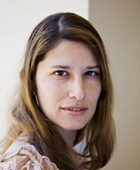
Linda van Laake

2020-04-30T15:29:45+02:00

Linda van Laake received the Heineken Young Scientists Award for Medicine 2012 for her research on regeneration of the heart with embryonic stem cells.
She is carrying out her innovative research at the Hubrecht Institute and Utrecht University Medical Centre. After taking her PhD, Dr Van Laake was awarded an ICIN fellowship for postdoctoral work at the Gladstone Institute at the University of California, San Francisco (UCSF). She then commenced clinical training in cardiology and also began work with her own research group, supported by a VENI scholarship awarded by the Netherlands Organisation for Health Research and Development (ZonMw). The jury praises Dr Van Laake highly as one of the few young medical specialists who succeed in combining clinical work with basic scientific research, referring also to her perseverance and creativity.
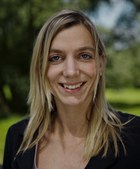
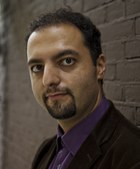
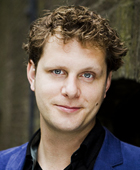
Ugur Ü. Üngör

2020-04-22T15:17:13+02:00

The sociologist and historian Dr Uğur Ümit Üngör received the Heineken Young Scientists Award for History 2012 for his historical-sociological research on mass violence, nationalism, and the creation of states.
Dr Üngör has already received a number of prizes for his PhD research on the creation of the Turkish nation state in the period from 1913 to 1950, a politically sensitive issue. He has an impressive list of publications that includes three monographs, and has become an international authority in the field of genocide studies. Dr Üngör is now a lecturer at Utrecht University and a lecturer/researcher with the Netherlands Institute for War Documentation (NIOD). He also writes satirical columns and essays on cosmopolitan life and on political and cultural boundaries. The jury calls Dr Üngör an outstanding, dedicated researcher who has already achieved a great deal. Amongst other things, it praises his ability to preserve a balance as regards the politically troublesome research topic of genocide.

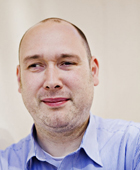
Tjisse van der Heide

2020-05-03T20:44:28+02:00

Tjisse van der Heide received the Heineken Young Scientists Award for Environmental Sciences 2012 for his research on the role of sea grasses and similar “ecosystem engineers” in the marine inter-tidal area.
Ecosystem engineers such as sea grasses and mussel banks are organisms that not only respond to environmental conditions but also greatly influence them themselves, thus creating suitable living conditions for themselves and for other species. Human action is putting ecosystem engineers under great pressure. Dr Van der Heide’s research is a major contribution to conservation biology. He made a positive impression on the jury as coordinator for the Wadden Sea Keys Project (Waddensleutels), a complex, large-scale research project concerning the ecological recovery of the Wadden Sea. The jury also sees Tjisse van der Heide as a role model for young researchers because of the quality of his work, his outreach activities, and his multidisciplinary approach.

Floris de Lange

2020-05-03T20:47:12+02:00

Floris de Lange received the Heineken Young Scientists Award for Cognitive Science 2012 for his research on visual perception and motorial imagery.
Dr De Lange received his PhD cum laude at Radboud University Nijmegen. After rounding off his postdoctoral research abroad, he quickly built up a research group at that university’s Donders Institute. He now has some forty publications to his name and has received a number of research grants, including recently a “Top Talent” grant from the Netherlands Organisation for Scientific Research (NWO). In the words of the jury, Dr De Lange displays intellectual depth and an understanding of virtually all areas of cognition, making him one of the most talented cognitive scientists currently working.

Puck Knipscheer

2020-04-22T15:13:24+02:00

Puck Knipscheer received the Heineken Young Scientists Award for Biochemistry and Biophysics 2010 for her research at the interface of biochemistry and molecular cell biology.
Her PhD research at the Netherlands Cancer Institute has generated important new insights into the way that protein activity is regulated in cells. As a postdoc at Harvard Medical School, Puck Knipscheer studied how the genes responsible for Fanconi anaemia (a genetic disease that leads to bone marrow failure and in many cases to cancer) are involved in repairing damage to DNA. She will be establishing a research group at the Hubrecht Institute in Utrecht in late 2010.

Menno van Zelm

2020-04-22T15:13:03+02:00

Dr Menno van Zelm received the Heineken Young Scientists Award for Medicine 2010 for his research on the cellular and molecular mechanisms that cause antibody deficiencies, i.e. serious immune system disorders.
His research is important for our understanding of immune disorders, how the body fights infection, and what causes inflammatory diseases and serious bone marrow and lymph node disorders. Menno van Zelm works at Erasmus Medical Centre Rotterdam.

Remco Breuker

2020-05-03T21:09:38+02:00

Remco Breuker received the Heineken Young Scientists Award for History 2010 for his research on Korean identities.
He places Korean medieval history within the broader theoretical context of community and identity. His PhD research led to new perspectives on how societies can be founded on contradictory principles a field that is far from being exhausted. He depicts Korea’s past as a complex and discontinuous whole full of contrasts, paradoxes and ambiguity, but one that was nevertheless decisive in constructing Korean identities.
Remco Breuker works at the University of Leiden. 

Appy Sluijs

2020-05-03T20:55:02+02:00

Appy Sluijs received the Heineken Young Scientists Award for Environmental Sciences 2010 for his research into the changes that arose in the earth’s ecosystems millions of years ago.
He reconstructs sudden climate changes caused by natural processes in the past. His research helps us understand the variability of ecosystems, the climate and natural processes on both human and geological timescales. Sluijs focuses in particular on climate changes in the past that resemble those in the present, making it possible to consider the influence of humankind (for example CO2 emissions) in a geological context. Appy Sluijs works at the University of Utrecht and is a member of the Royal Academy’s Young Academy.

Paola Escudero

2020-05-03T20:57:22+02:00

Paola Escudero received the Heineken Young Scientists Award for Cognitive Science 2010 for her research on second language speech learning.
Her PhD research at the University of Utrecht concerned phonological categories in polyglots. Paola Escudero has developed a model within the context of Optimality Theory that describes the cognitive processes that speakers go through when forming sounds that are unknown in their native language. As a postdoc, she is currently conducting psycholinguistic research in order to test her theoretical model experimentally. Paola Escudero works at the University of Amsterdam.

Go to Top