Portfolio

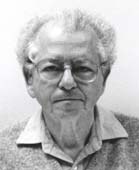
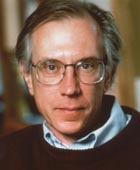
Thomas R. Cech

2020-04-13T15:40:01+02:00

Thomas R. Cech received the Dr H.P. Heineken Prize for Biochemistry and Biophysics 1988 for one of the most sensational discoveries in biochemistry in the last few years by showing that RNA can act as an enzyme.
Up till then the ‘dogma’, that all biological catalysts are proteins, had not been questioned. Cech and his co-workers demonstrated that the large ribosomal RNA precursor of Tetrahymena thermophilia has the capacity of self-splicing or self-processing. In the complete absence of a protein enzyme, an intervening sequence (IVS or intron) is removed and the remaining RNA pieces are ligated correctly. The only requirement for this reaction is the presence of guanosine (or a derivative thereof, like for instance GMP) and magnesium ions. Cech and his colleagues were able to clarify the mechanistic details of this reaction.
The finding that RNA can act as an enzyme (also called ribozyme) active in breaking and making internucleotide bonds in present-day biological systems, raises the question whether these properties may have played a role in the prebiotic replication and evolution of RNA molecules. Since the substrate oligonucleotides are aligned by a complementary sequence in the IVS RNA itself, the polymerization reaction fulfils one of the requirements of a primitive autocatalytic replication mechanism. RNA has the qualities which are required for a hypercycle mechanism.
About twenty years ago Francis Crick remarked: ‘RNA is a molecule which desperately tries to be a protein.’ Thomas Cech demonstrated that RNA indeed is able to behave like a protein in that it has enzymatic activity. Thus it is possible that RNA was the primordial prebiotic molecule and that proteins and DNA evolved subsequently.

About the laureate
Thomas R. Cech was born in Chicago on December 8, 1947. He received his B.A. degree in chemistry from Grinnell College and his Ph.D. degree in chemistry from the University of California, Berkeley. His postdoctoral work in biology was conducted at the Massachusetts Institute of Technology. Since 2000, Thomas Cech has been President of the Howard Hughes Medical Institute (Chevy Chase, Maryland, USA). He still maintains his laboratory at the University of Colorado in Boulder, USA, where he is Distinguished Professor in the Department of Chemistry and Biochemistry. He was elected to the National Academy of Sciences in 1987 and received the Nobel Prize in Chemistry in 1989, together with Sidney Altman.
Toon Verhoef

2020-05-03T19:38:59+02:00

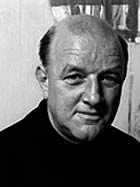
Toon Verhoef was awarded the Dr A.H. Heineken Prize for Art 1988.
Toon Verhoef has throughout the development of his vast oeuvre produced an uninterrupted series of paintings, gouaches, drawings and lithographs in which the consistent development of his painterly thinking clearly emerges. He has continually adhered to his goal, without troubling himself with the question of whether his work would earn recognition or not.
Toon Verhoef is a painter whose canvases stand out by their monumental format and their multi-layered, physical structure and transparency. Forms, colous, characters, lines, structures and textures overlay one another like transparent collages, offering an ingenious perspective that commands our undivided attention. Each work gives us a glimpse into the perceptual world of the artist and his intuitive quest. Verhoef was also a professor of art in the Netherlands and abroad.

About the laureate
Toon Verhoef (1946 Voorburg NL) is based in Edam and works in Amsterdam.
Education: Atlantic College, Wales UK; Art History, the University of South Africa, Pretoria SAF; Rijksakademie van Beeldende Kunsten, Amsterdam; Ateliers 63, Haarlem.
Other Prizes/Residencies: P.S.1, New York (1977-1978) USA; Buning Brongers Prize (1980); Sandberg Prize (1985); Darthmouth College, Hanover (2004) USA; Nirox Foundation, Cradle of Humankind World Heritage Site (2009) SAF.

Works of art

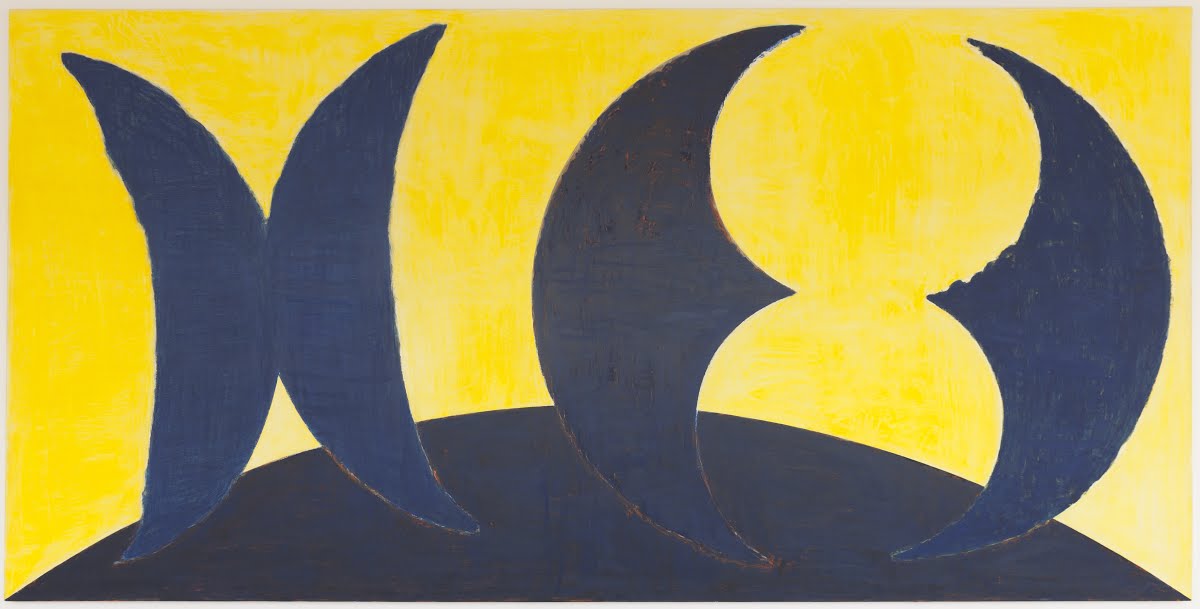
Untitled, 1988  Oil on canvas, 290 x 580 cm
Courtesy Art & Project, Amsterdam

Untitled, 1987  Oil on canvas, 290 x  470 cm
Condon Collection

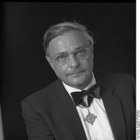
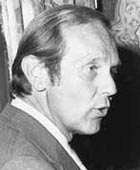
Bela Julesz

2020-03-30T19:21:25+02:00

Bela Julesz and Werner E. Reichardt received the Dr H.P. Heineken Prize for Biochemistry and Biophysics 1985. Both scientists performed pioneering research on the perception of depth and motion.
Julesz discovered that depth could be perceived by means of random patterns generated by a computer, which by its own don’t present anything identifiable. Does one look at the patterns by means of a stereoscope then all at once an object may dissolve from the background, creating a threedimensional effect. This offers e.g. possibilities for improving the research on eye-disturbances.
Reichardt studied by means of a common housefly the optical processing of motion and patterns. In the laboratory he constructed a kind of perfected home-trainer for the fly, by which he was able to take various measurements, and to formulate a general model for motion-perception. The research of both scientists affected decisively our conception on visual information-processing.

Biography
This was the first time that the award has been given to two scientists at the same time. Dr Julesz, of Hungarian origin, worked at the Bell Laboratories at Murray Hill, New Jersey, as a Head of the Department on Visual Perception Research. Professor Reichardt was Director of the Max-Planck-Institut für Biologische Kybernetik at Tübingen.
Professor Reichardt passed away in 1992. Dr Julesz died on 31 December 2003.

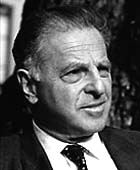
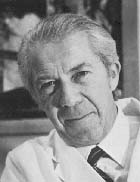
Werner E. Reichardt

2020-04-30T15:22:24+02:00

Werner E. Reichardt and Bela Julesz received the Dr H.P. Heineken Prize for Biochemistry and Biophysics 1985. Both scientists performed pioneering research on the perception of depth and motion.
Julesz discovered that depth could be perceived by means of random patterns generated by a computer, which by its own don’t present anything identifiable. Does one look at the patterns by means of a stereoscope then all at once an object may dissolve from the background, creating a threedimensional effect. This offers e.g. possibilities for improving the research on eye-disturbances.
Reichardt studied by means of a common housefly the optical processing of motion and patterns. In the laboratory he constructed a kind of perfected home-trainer for the fly, by which he was able to take various measurements, and to formulate a general model for motion-perception. The research of both scientists affected decisively our conception on visual information-processing.

Biography
This was the first time that the award has been given to two scientists at the same time. Dr Julesz, of Hungarian origin, worked at the Bell Laboratories at Murray Hill, New Jersey, as a Head of the Department on Visual Perception Research. Professor Reichardt was Director of the Max-Planck-Institut für Biologische Kybernetik at Tübingen.
Professor Reichardt passed away in 1992. Dr Julesz died on 31 December 2003.

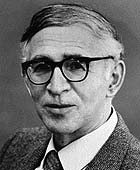
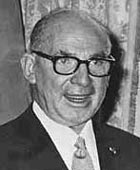
Charles Weissmann

2020-03-30T19:25:50+02:00

Charles Weissmann has been awarded the Dr H.P. Heineken Prize for Biochemistry and Biophysics 1982 for achievements in three areas: his studies on the replication of viruses, the development of reverse genetics and his contributions to the knowledge of gene expression in higher organisms, like man. 
The jury also noted that these achievements were produced in a biochemical career spanning less than twenty years and that it meets the highest standards of scientific quality without significant dips or lapses.

Biography
Charles Weissmann was born on 14th October, 1931 in Budapest, Hungary. Weissmann went to Zurich University and obtained his MD in 1956 and Ph.D. in Organic Chemistry in 1961. Weissmann has been director of the Institute for Molecular Biology in Zurich, President of the Roche Research Foundation and Member of the Scientific Coucil of Biogen. 
Weissmann won several awards and was a member of the American Society of Biological Chemistry and the Deutsche Akademie der Naturforscher Leopoldina. He also became a Foreign Associate of the U.S. National Academy of Sciences.

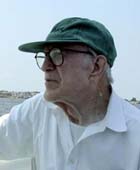
Sir Aaron Klug

2020-04-13T15:37:42+02:00

Aaron Klug was awarded the Dr H.P. Heineken Prize for Biochemistry and Biophysics 1979. He received the prize for his pioneering research in the field of structure determination of large macromolecular complexes. 
His accomplishments include the elucidation of structure and assembly of viruses, transfer-RNA, chromatin and microtubules. Klug also developed the fourier-microscopy and three dimensional image reconstruction.

Biography
Aaron Klug was born in 1926 in Zelvas, Lithuania. He studied at the University of Witwatersrand in Johannesburg, the University of Cape Town and the University of Cambridge. He obtained his Ph.D. in 1952. Klug teached and worked at Cambridge University for over twenty years. In 1982 he won the Nobel Prize in Chemistry.
Klug passed away in November 2018.

Laurens L.M. van Deenen

2020-04-17T09:31:00+02:00

Laurens L.M. van Deenen received the Dr H.P. Heineken Prize for Biochemistry and Biophysics 1976 for his comprehensive research on the structure of bio-membranes.
Biomembranes, which are made of proteins and lipids, are responsible for the maintenance of the structure of the living cell: they control the substances going in and out of the cell.

Biography
Van Deenen had been a full professor of biochemistry at the University of Utrecht, and was known as one of the world’s pre-eminent specialists in the area of biochemistry and biophysics. Van Deenen was on the editorial staff of Biochimica et Biophysica Acta, the largest biochemistry periodical in the world; he was secretary general of the Federation of European Biochemical Societies; and he was a member of the Scientific Advisory Committee of the European Molecular Biology Laboratory in Heidelberg.
Laurens van Deenen passed away in 1994.

Christian de Duve

2020-05-03T19:50:55+02:00

Christian de Duve was awarded the Dr H.P. Heineken Prize for Biochemistry and Biophysics 1973 for his discovery of the cell organelles called the lysosome and peroxisome.
As with many scientific discoveries, chance and the unpredictable played a significant part. While studying the mechanism of action of insulin as part of research into diabetes and carbohydrate metabolism, the expected activity of the acid under study (phosphatase) deviated significantly from expectations. Realizing this was something new, de Duve shifted the emphasis of research to this new ‘mechanism of the latency phenomenon’. De Duve postulated that the enzyme was surrounded by a membrane which prevented it from affecting the other cell components.
In 1955, De Duve introduced the term lysosome to describe what was then still a hypothetical particle as yet unobserved with the microscope. Later the same year, the American scientist Alex Novikoff succeeded in demonstrating the lysosome with the electron microscope. During further study, it became clear that the lysosomes were not only the storage sites of acid phosphatase, but also of various types of enzymes all belonging to the group of lytic enzymes or those concerned with decomposition. Further study showed that the variety of enzymes in the lysosome was so great that nearly all macromolecules involved in cell composition could be decomposed by the lysosomal enzymes. 
It is now clear that lysosomes are the main components of an intracellular digestive system that has been recognized in a wide variety of cells, both in plants and animals. The discovery of the lysosome and of its effect and function has also had important consequences for medicine. In diseases such as rheumatism, cancer, arthritis, infections, poisoning and in some hereditary disorders the role of the lysosome is now the focus of scientific attention. De Duve has not only discovered the lysosome but also the peroxisome, another cell particle in which a number of enzymes can be localized, although the activity of these is not latent as it is in the lysosomal enzymes.

About the laureate
Christian de Duve, who is of Belgian nationality, was born at Thames-Ditton (UK) on October 2, 1917. He studied medicine at the University of Louvain (Doctor of Medicine in 1941), after which he specialized in chemistry at the Nobel Institute, Stockholm and in biochemistry at the Department of Biological Chemistry, Washington University Medical School, St. Louis (USA). From 1947 to 1951 he was lecturer in physiological chemistry at the Catholic University of Louvain, later being appointed professor at the same university and head of the Department of Physiological Chemistry. In 1962 he was appointed Professor and Head of the Department of Biochemical Cytology at the Rockefeller University, New York (USA).
De Duve started his scientific career researching into diabetes and carbohydrate metabolism. Further studies led him to the discovery of the lysosome.
De Duve has published a great number of articles, and has sat on the editorial boards of the Journal of Theoretical Biology and the Journal of Cell Biology among other journals. He is still one of the editors of Subcellular Biochemistry and of Preparative Biochemistry. De Duve is an honorary member of various societies (e.g. the American Academy of Arts and Sciences), has received honorary degrees from the Universities of Turin, Leyden and Sherbrooke (Canada), and has received several awards including the Nobel prize for medicine in 1974 with Albert Claude of Belgium and George Emil Palade of the United States of America.
De Duve passed away in May 2013.

Britton Chance

2020-05-03T19:53:25+02:00

Britton Chance was awarded the Dr H.P. Heineken Prize for Biochemistry and Biophysics 1970 for his new biophysical techniques whereby biochemical and biophysical processes which can be studied in detail in vitro in isolated systems by a variety of highly sophisticated methodologies, can also be studied in their natural and more complex membrane environment.
Britton Chance describes his field of study as ‘membrane bioenergetics: the study of the control and coupling of energy-conserving and energy-requiring reactions in biological membranes. Chance points out that they must go together with ‘the study of these reactions in the highly complex environment in which they occur in nature. And it is in this most complex environment that the most important processes of membrane bioenergetics occur – not only the basic steps by which the energy from the oxygen molecule or from a photon of sunlight is converted to useful work in the living cell, but also the whole range of cell functions, including that most complex function of all: memory, learning and abstract thought.’ The importance of Chance’s work in this field of research lies in the fact that he has new biophysical techniques whereby biochemical and biophysical processes which can be studied in detail in vitro in isolated systems by a variety of highly sophisticated methodologies, can also be studied in their natural and more complex membrane environment.
The experimental data thus derived have formed the basis for new theories and detailed reaction mechanisms for cell function. The contributions of Professor Chance are not confined to enzymelogy and bioenergetics. Perhaps the field that interests him most of all is the mechanism of metabolic control in the intact cell, even in the living mammal. Chemical methodology is of limited application to this problem. Sensitive optical methods that Chance has developed are capable of following the detailed changes in the mitochondria, for example, following upon changes in the physiological state of the animal. In considering the future of membrane bioenergetics, Professor Chance pointed out that within the membrane structure that the origin of many diseases – among them our most distressing and crippling afflictions – may be found. And since membranes play a key role in all of biology, it is obvious that not only medical science, but also veterinary and agricultural science as well, will benefit from these studies. And so it is no small part of the goal of membrane bioenergetics to bridge the gap between the structures of the isolated components and their structure as they may exist in their state in nature, with a continuous and highly significant impact upon the agricultural, veterinary, medical, and – in the sense that mind is essentially a problem of bioenergetics – the psychological, behavioural, and social sciences as well.’

About the laureate
Britton Chance was born on July 24, 1913 in Wilkes-Barre, Pennsylvania (USA). In 1940 he graduated in physical chemistry in Philadelphia (USA) and in 1942 he graduated in biology from Cambridge (UK). Before the Second World War he was especially occupied by the study of enzyme mechanisms. During the war he was head of a Massachusetts Institute of Technology team engaged in precision instrumentation and radio reception. His contributions to the development of radar were recognized in 1950, when he received the Presidential Certificate of Merit. After the war he again took up enzyme research. In 1962 he was appointed doctor medicinae honoris causa by the Karolinska Institute, Stockholm. Since 1949 Chance has been Professor of Biophysics and Director of the Eldridge Reeves Johnson Foundation for Medical Physics at the University of Pennsylvania (USA). He has published more than 500 scientific articles covering many fields of biochemistry, biophysics and physiology. The experimental methods and approach introduced by him dominate current research into the mechanism of intracellular respiration and photosynthesis.
In addition to the awards mentioned above, he has also received the Paul Lewis Award in Enzyme Chemistry (1950) and the Gold Medal of the Genootschap ter bevordering van Natuur-, Genees- en Heelkunde, Amsterdam (1965). In 1975 he was awarded a National Medal of Science by the President of the United States of America.
Chance passed away in November 2010.

Jean L.A. Brachet

2020-03-30T19:38:08+02:00

Jean L.A. Brachet was awarded the Dr H.P. Heineken Prize for Biochemistry and Biophysics 1967 for his contribution to the knowledge of the role played by the second type of nucleic acid: ribonucleic acid (RNA).
In the late 1920s little was known about either type of nucleic acid except that DNA was characteristic for animal cells and RNA for plant cells. But as early as 1933 Brachet was able to show that DNA was localized in chromosomes and RNA in cytoplasm of all cells. Brachet, to quote Professor J.A. Cohen at the prize-giving in 1967, ‘must have been one of the first to have a premonition about the significance of DNA as a carrier of genetic information.’
The association of rigorous enzymatic methods, allied to cytochemistry, led Brachet during the war to develop the ribonuclease test. His work paved the way to the conclusion that RNA plays an active role in protein synthesis. This work of Brachet led to later discoveries about the exact mechanism of genetic transcription and translation. Brachet also carried out pioneering work in the field of cell differentiation. He has shown how this is controlled by the chromosomes on which the formation of cytoplasmic ribonucleoprotein particles depends. Brachet stressed the importance of the ribonucleic acid particles for differentiation and as support of the so-called ‘morphogenetic potential gradients’ of developing embryos and the ‘morphogenetic substances’ of acetabularia amphibia. Making full use of the new notions developed in molecular biology Brachet demonstrated in later papers that differentiation is preceded by the formation of new ribosomes and accompanied by the release from the nucleus of a wave of new messenger RNA.

About the laureate
Jean Louis Auguste Brachet was born in Etterbeek (Belgium) on March 19, 1909. He studied medicine at the University of Brussels and graduated summa cum laude in 1934. Thereafter he worked at the Universities of Cambridge (UK) and Princeton (USA) and at the institutes of marine biological research in Roscoff, Sète, Naples and Woods Hole (USA). Brachet was a Professor of Animal Morphology (embryology and cytology) and General Biology at the Vrije Universiteit of Brussels and Research Director of the International Laboratory for Genetics and Biophysics in Naples. He has held visiting professorships at the Institut Pasteur, Paris, the Universities of Pennsylvania (USA) and Liège, the Cancer Research Centre in India, the University of Ghent, the Rockefeller Institute, the Weizmann Institute of Israel, and the Universities of Louvain and Texas. He has received many distinctions and awards, and honorary doctorates of the Universities of Poitiers, Turin, Palermo, Edinburgh and Strasbourg.
He has published a great number of articles, most of them in journals, and has also written four books. L’Embryologic chimique (1944), which has been translated into English, Russian and Chinese; Biochemical Cytology (1957), which has been translated into Russian; the Biochemistry of Development(1960); and the Biological Role of Ribonucleic Acids (1960). The last contains a survey of the research on RNA carried out by Brachet and others up to that time.
Jean Brachet passed away in 1998.

Go to Top