

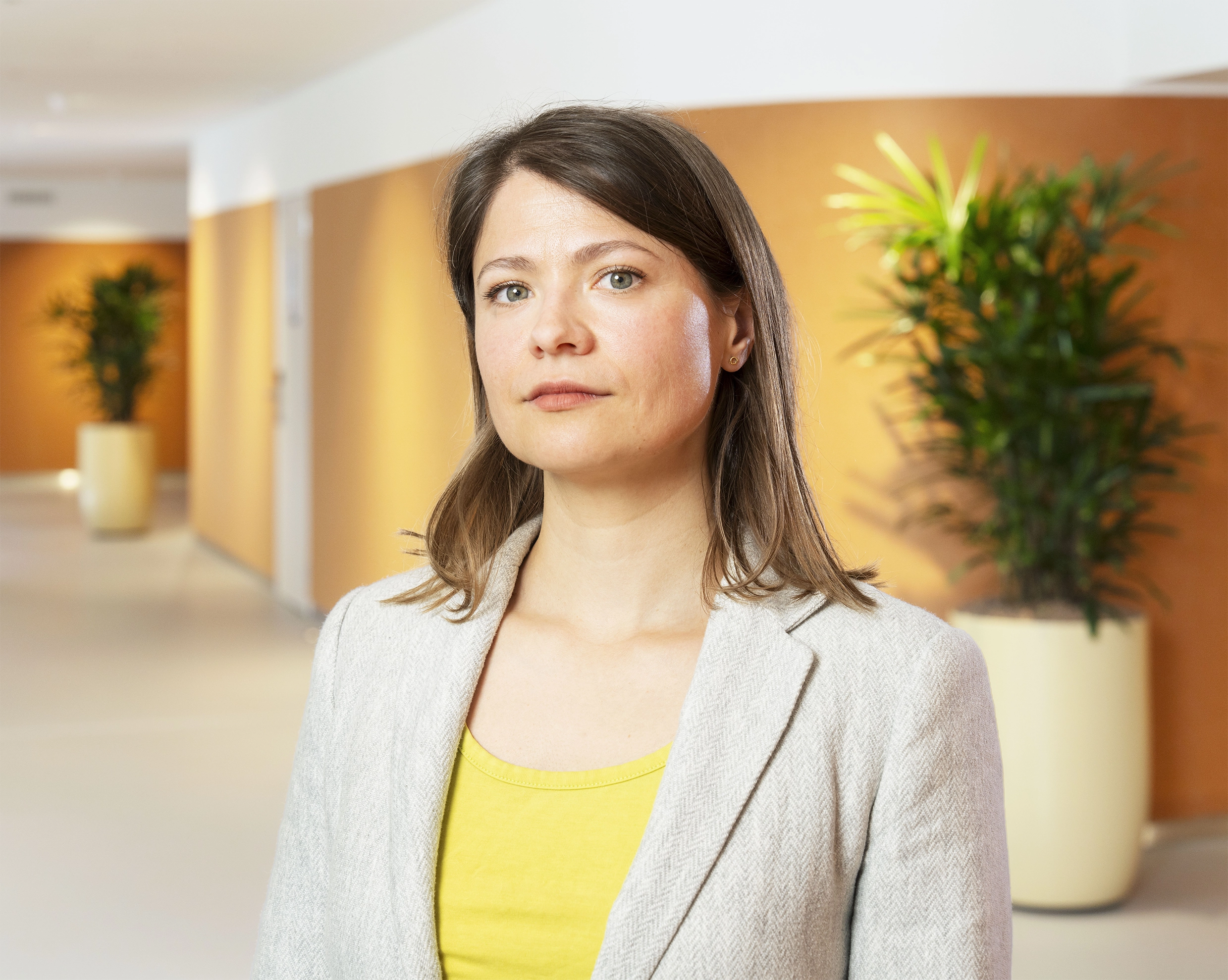
How do people make choices, and what happens in our brains when we do? Anne Urai (1988), assistant professor of cognitive neuroscience at Leiden University, investigates how our brains process information and use it to make decisions. In applying the resulting insights to current issues in society, she hopes to gain a better understanding of what motivates people to adopt sustainable behaviour. For her research, she is receiving the Heineken Young Scientists Award for Social Sciences 2026.
Every day, people constantly make decisions about what they see, hear, and expect. But why does one person react differently than another to the exact same information? To gain a constantly improving understanding of how our brain processes information and where our decision-making behavior stems from, Urai translates real-world situations into controlled experiments in her laboratory.
Influence of previous choices and social pressure
Using magnetoencephalography (MEG), Urai and her colleagues record the brain’s magnetic activity while research participants play specially designed computer games. She uses this method to investigate how previous choices influence new decisions, among other topics. “We often don’t evaluate new information in a completely neutral way,” Urai says. “Our previous choices colour how we interpret new situations. That can lead to forms of confirmation bias. By being aware of this factor, we can make sure to take it into account more effectively when making important decisions.”
Urai also investigates how people make choices in group settings, particularly regarding social issues such as sustainability. Is someone more likely to choose the vegetarian option if more and more colleagues do too? This can lead to social tipping points: sudden shifts in behaviour that occur when people align their choices with others.
From the lab to society
As a self-proclaimed academic climate activist, in the future Urai wants to increasingly translate her lab research into behavioural change that is relevant to major issues in society. “Such as the shift toward more sustainable ways of living,” Urai says. “Insights from behavioural science and neuroscience can make a tangible contribution to that process.” In this context, she is curious about individual differences: why do some people stick to their habits while others do not?
Jury praises originality and impact
The jury, chaired by Hester den Ruijter (professor at UMC Utrecht), praises the originality, quality, and societal relevance of Urai’s work. According to the jury, she convincingly connects fundamental science with current issues in society. “With her interdisciplinary profile, strong international standing, and clear societal engagement, she is an inspiring role model for young researchers,” Den Ruijter says.